Navigating the UK Business Visa Requirements for Expats: A Comprehensive Guide

Navigating the UK Business Visa Requirements for Expats: A Comprehensive Guide
Starting a business or pursuing entrepreneurial opportunities as an expat in the UK requires a clear understanding of the UK business visa requirements expat. The UK offers various immigration routes designed for business professionals, investors, and innovators looking to establish or expand their ventures within its dynamic economy. This guide provides an in-depth look at the essential criteria, application processes, and crucial considerations for expats aiming to secure a UK business visa. Understanding these requirements is paramount for a smooth and successful immigration journey, ensuring compliance and maximizing your chances of approval.
Types of UK Business Visas for Expats
The UK offers several visa categories for individuals seeking to conduct business, invest, or set up new enterprises. Identifying the correct visa category is the first critical step for any expat. Here are the primary routes:






- Innovator Founder Visa: Designed for experienced business people seeking to set up and run an innovative business in the UK. The business idea must be endorsed by an approved body.
- Global Talent Visa: While not exclusively a ‘business’ visa, this route is available to leaders or potential leaders in science, digital technology, arts, and culture, and can be relevant for highly skilled entrepreneurs.
- Global Business Mobility Visas: An umbrella category for overseas businesses to transfer staff to the UK or for individuals to come to the UK for specific business purposes. This includes:
* Senior or Specialist Worker visa: For eligible employees transferring to a UK branch of their existing company.
* UK Expansion Worker visa: For senior managers or specialist employees establishing a UK presence for an overseas business.
* Graduate Trainee visa: For transfer as part of a graduate training programme leading to a senior role.
* Secondment Worker visa: For workers undertaking a temporary work assignment in the UK where the overseas employer has a contract with a UK organisation.
* Service Supplier visa: For contractual service suppliers working under international trade agreements.
It’s important to note that the Start-up Visa, Tier 1 Investor Visa, and Representative of an Overseas Business Visa have been closed to new applicants, with their functions largely absorbed by the Innovator Founder and Global Business Mobility routes.
Innovator Founder Visa: Key UK Business Visa Requirements for Expats
This visa route is a significant option for expats with a genuine and innovative business idea. The core requirements include:
- Endorsement: You must have an endorsement from an approved UK endorsing body, confirming your business idea is innovative, viable, and scalable.
- Business Plan: A robust business plan detailing your venture’s objectives, market analysis, and financial projections.
- Investment Funds: You may need to demonstrate sufficient funds to invest in your business, although this specific requirement has become more flexible depending on the endorsement.
- English Language: Prove your English language ability to at least CEFR Level B2.
- Maintenance Funds: Show you have enough personal funds to support yourself and any dependants in the UK without recourse to public funds.
General Requirements for All UK Business Visas
Regardless of the specific visa type, several fundamental UK business visa requirements expat applicants must meet to ensure their application is processed successfully. Understanding these general criteria is crucial for a smooth application process.
- Valid Passport/Travel Document: Your passport must be valid for the entire duration of your intended stay in the UK.
- Financial Stability: Proof of sufficient personal funds to support yourself and any dependants in the UK. This is often demonstrated through bank statements.
- English Language Proficiency: Most business routes require applicants to demonstrate English language skills, typically through an approved test or by holding a degree taught in English.
- Criminal Record Check: You may be required to provide a criminal record certificate from any country you have lived in for 12 months or more over the last 10 years.
- Tuberculosis (TB) Test: If you are applying from a country where TB screening is required by the UK Home Office.
- Biometrics: You will need to provide your fingerprints and a photograph at a visa application centre.
- Application Form and Fee: Completing the correct online application form and paying the associated visa application fee, along with the Immigration Health Surcharge (IHS).

The Application Process: Step-by-Step
The journey to obtaining a UK business visa involves several key stages. A methodical approach will help streamline your application.
1. Determine Eligibility: Carefully research and identify the correct visa category that aligns with your business activity and personal circumstances.
2. Gather Documentation: Collect all required supporting documents meticulously. This often includes financial statements, educational certificates, business plans, and endorsement letters.
3. Secure Endorsement/Sponsorship (if applicable): For visas like the Innovator Founder or Skilled Worker, securing an endorsement from an approved body or sponsorship from a UK employer is mandatory.
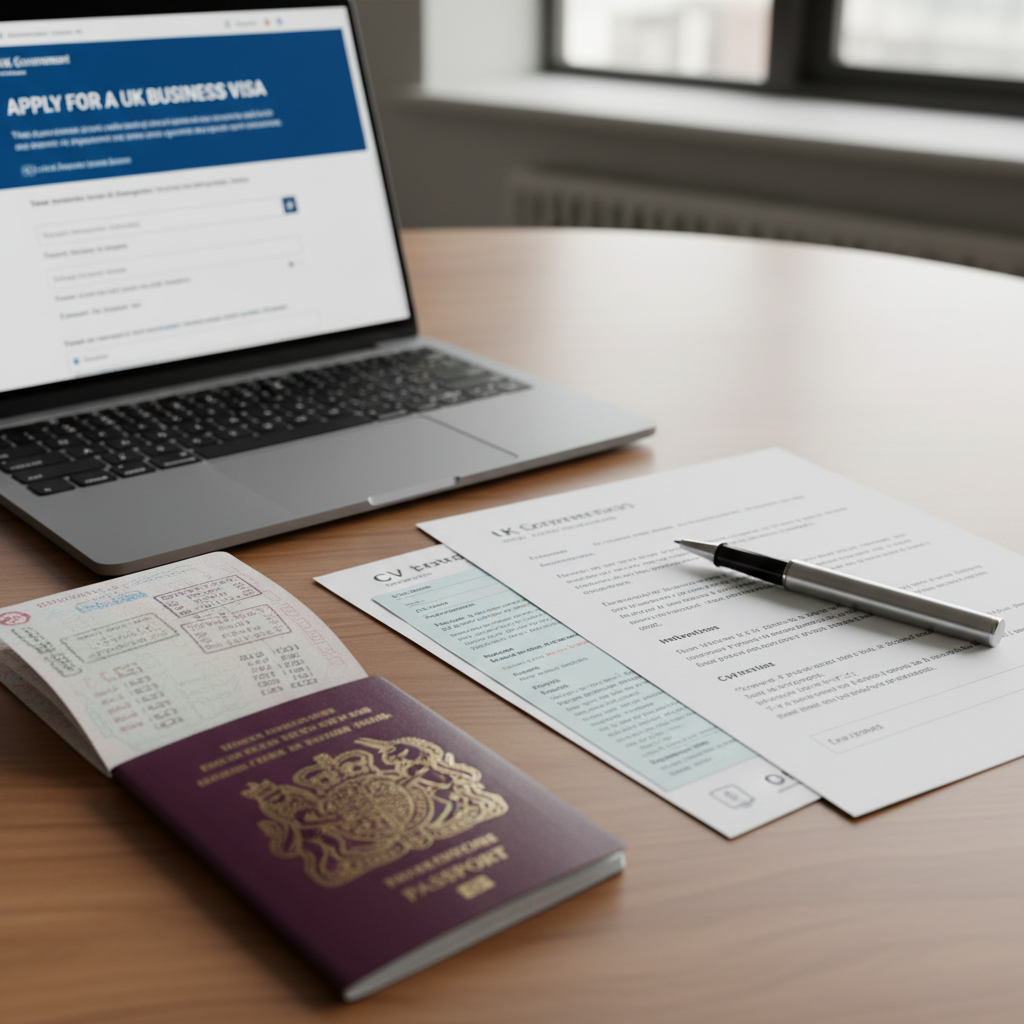
4. Complete Online Application: Fill out the appropriate online application form on the official UK government website, ensuring all information is accurate and consistent.
5. Pay Fees and IHS Surcharge: Pay the visa application fee and the Immigration Health Surcharge, which covers access to the UK’s National Health Service.
6. Book Biometrics Appointment: Schedule and attend an appointment at a designated UK Visa and Citizenship Application Services (UKVCAS) centre to provide your biometrics.
7. Attend Interview (if required): Some applicants may be invited for an interview to discuss their business plan or circumstances further.
8. Receive Decision: Await the outcome of your application. Processing times can vary depending on the visa type and country of application.
Essential Documents for Your UK Business Visa Application
Preparing a comprehensive set of documents is critical. While specific requirements vary by visa, common documents include:
- Proof of Business Idea (Innovator Founder): Detailed business plan, market research, and financial projections demonstrating innovation, viability, and scalability.
- Endorsement Letter: Official letter from an approved endorsing body.
- Proof of Funds: Recent bank statements showing sufficient personal maintenance funds.
- English Language Test Results: Certificates from approved English language tests (e.g., IELTS, PTE).
- Previous Travel History: Copies of visas and stamps from previous international travel.
- Educational Certificates/CV: Relevant academic qualifications and a detailed curriculum vitae.
- Tuberculosis Test Certificate: If you are from a country on the UK’s specified list.
- Marriage/Birth Certificates: If applying with dependants.
Common Challenges and Tips for Expats
Navigating the UK business visa requirements expat route can present challenges. Here are some tips to help you succeed:
- Thorough Research: Visa rules and policies frequently change. Always refer to the latest guidance on the official UK government website.
- Professional Advice: For complex cases or specific business ventures, consider consulting with an immigration lawyer or specialist adviser.
- Attention to Detail: Incomplete or inaccurate applications are a leading cause of refusal. Double-check all information and documents.
- Start Early: Application processing times can vary significantly. Begin your application process well in advance of your intended travel date.
- Financial Planning: Ensure you meet all financial requirements for both your business and personal maintenance.
Conclusion
Navigating the UK business visa requirements expat landscape can seem complex, but with careful preparation and a clear understanding of each visa category’s specifics, expats can successfully establish their business presence in the UK. By focusing on the correct visa route, meticulously preparing documentation, and meeting all eligibility criteria, you can pave the way for a thriving business venture in one of the world’s leading economies. The UK welcomes global talent and innovation, and with the right approach, your business aspirations in the UK are well within reach.